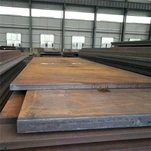
What is 304 Stainless Steel
304 stainless steel is a popular grade of stainless steel that belongs to the austenitic stainless steel family. It is one of the most widely used stainless steel alloys due to its excellent corrosion resistance, good formability, and versatility.
The 304 steel contains both chromium (between 18% and 20%) and nickel (between 8% and 10.5%) metals as the main non-iron constituents. It is a standard "18/8" austenitic stainless steel.
304 stainless steel is highly formable and can be easily fabricated into various shapes. It can be formed into sheets, plates, bars, tubes, and wire. It also exhibits good weldability, allowing for the creation of strong and durable welded joints.
 |
 |
 |
|
304 stainless steel pipe |
304 stainless steel tubing |
ss 304 pipe |

The chemical composition of 304 stainless steel is primarily composed of iron, chromium, and nickel. The iron makes up the bulk of the composition, ranging from 50% to 70%. The chromium content is approximately 18% to 20%, while the nickel content is around 8% to 11%. Additionally, trace amounts of carbon, manganese, silicon, and sulfur are also present.
SS 304 Chemical Composition Table
| Grade | C | Mn | Si | P | S | Cr | Mo | Ni | N | |
| 304 | min. max. |
- 0.08 |
- 2.0 |
- 0.75 |
- 0.045 |
- 0.030 |
18.0 20.0 |
- | 8.0 10.5 |
- 0.10 |
| 304L | min. max. |
- 0.030 |
- 2.0 |
- 0.75 |
- 0.045 |
- 0.030 |
18.0 20.0 |
- | 8.0 12.0 |
- 0.10 |
| 304H | min. max. |
0.04 0.10 |
- 2.0 |
- 0.75 |
-0.045 | - 0.030 |
18.0 20.0 |
- | 8.0 10.5 |
- |
Chromium:The high chromium content in 304 stainless steel is responsible for its excellent resistance to corrosion. Chromium forms a thin oxide layer on the surface of the steel that protects it from environmental factors such as moisture and oxygen. This oxide layer is self-healing, meaning that it can reform if damaged or scratched, ensuring the continued protection of the steel.
Nickel, on the other hand, enhances the toughness and ductility of 304 stainless steel. It also increases the resistance of the steel to high temperatures. Manganese, silicon, and sulfur are present in trace amounts to improve the machinability of the steel.
Carbon:the addition of carbon to the composition of 304 stainless steel helps to increase its strength and hardness. However, too much carbon can lead to decreased corrosion resistance, which is why the carbon content is kept relatively low.
The chemical composition of SS 304 stainless steel is carefully balanced to provide excellent corrosion resistance, high-temperature strength, toughness, and machinability. Its unique properties make it an ideal choice for a wide range of industrial applications, including those in the chemical, food, and pharmaceutical industries. With its durability and longevity, type 304 stainless steel is a highly sought-after material that is used extensively worldwide.