Wear resistant steel plates are essential materials in various industries where durability and resistance to abrasion are crucial. As a leading supplier of wear resistant steel plates, I understand the importance of adhering to strict quality standards to ensure that our products meet the diverse needs of our customers. In this blog post, I will discuss the key quality standards for wear resistant steel plates and how they impact the performance and reliability of these materials.
Chemical Composition
The chemical composition of a wear resistant steel plate plays a fundamental role in determining its properties. Different alloying elements are added to enhance hardness, toughness, and wear resistance. For example, manganese is a common alloying element that improves the hardenability and toughness of the steel. Our MN13 Grade Manganese Sheet is specifically designed with a high manganese content to provide excellent wear resistance in applications where impact and abrasion are prevalent.
Carbon is another critical element in wear resistant steel. A higher carbon content generally leads to increased hardness, but it can also reduce the toughness of the material. Therefore, a careful balance must be struck between carbon content and other alloying elements to achieve the desired combination of properties. Our engineers work closely with metallurgists to optimize the chemical composition of our steel plates, ensuring that they meet the specific requirements of each application.
Hardness
Hardness is one of the most important quality indicators for wear resistant steel plates. It is a measure of the material's ability to resist indentation and abrasion. There are several methods for measuring hardness, including the Brinell, Rockwell, and Vickers hardness tests. The appropriate hardness test method depends on the thickness and type of the steel plate.
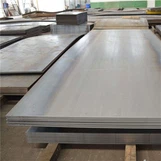
In general, wear resistant steel plates have a high hardness value, typically ranging from 300 to 600 Brinell hardness (HB). Our NM300TP Wear Resistant Steel Plate has a minimum hardness of 300 HB, which provides excellent wear resistance in moderate to severe abrasion conditions. For more demanding applications, we offer plates with higher hardness values, such as our Plate Hardox 500, which has a hardness of approximately 500 HB.
Impact Toughness
While hardness is important for wear resistance, it is also essential for the steel plate to have sufficient impact toughness. Impact toughness is a measure of the material's ability to absorb energy and resist fracture under impact loading. In applications where the steel plate is subjected to high-impact forces, such as in mining and construction equipment, a high impact toughness is crucial to prevent premature failure.
To ensure good impact toughness, our wear resistant steel plates are heat-treated using advanced processes. Heat treatment can improve the microstructure of the steel, making it more resistant to cracking and fracture. We also conduct rigorous impact testing on our products to verify their performance under real-world conditions.


Microstructure
The microstructure of a wear resistant steel plate has a significant influence on its properties. A fine-grained microstructure generally provides better mechanical properties, including higher strength, toughness, and wear resistance. Our manufacturing processes are designed to produce steel plates with a uniform and fine-grained microstructure.
We use advanced rolling and heat treatment techniques to control the grain size and orientation of the steel. This not only improves the mechanical properties of the plate but also enhances its corrosion resistance. By carefully controlling the microstructure, we can ensure that our wear resistant steel plates meet the highest quality standards.
Surface Quality
The surface quality of a wear resistant steel plate is also an important consideration. A smooth and defect-free surface is essential for optimal performance. Surface defects, such as cracks, pits, and inclusions, can reduce the wear resistance of the plate and increase the risk of premature failure.
We have strict quality control measures in place to ensure the surface quality of our steel plates. Our production facilities are equipped with advanced inspection equipment, such as ultrasonic testing and magnetic particle testing, to detect any surface defects. In addition, our plates are carefully cleaned and coated to protect them from corrosion during storage and transportation.
Dimensional Accuracy
Dimensional accuracy is crucial for ensuring that the wear resistant steel plate fits properly into the intended application. Our manufacturing processes are designed to produce steel plates with precise dimensions. We use state-of-the-art cutting and machining equipment to ensure that the plates meet the specified length, width, and thickness tolerances.
Before shipping, our quality control team conducts a final inspection of the plates to verify their dimensional accuracy. This helps to minimize installation problems and ensure that the plates perform as expected in the customer's application.
Certification and Standards Compliance
To provide our customers with confidence in the quality of our wear resistant steel plates, we adhere to strict industry standards and obtain relevant certifications. Our products are manufactured in accordance with international standards, such as ASTM, EN, and JIS. We also hold certifications from recognized third-party organizations, such as ISO 9001 for quality management systems.
By complying with these standards and obtaining certifications, we demonstrate our commitment to producing high-quality wear resistant steel plates that meet the needs of our customers. Our customers can be assured that our products have been thoroughly tested and meet the highest industry benchmarks.
Conclusion
In conclusion, the quality standards for wear resistant steel plates are multifaceted and encompass various aspects, including chemical composition, hardness, impact toughness, microstructure, surface quality, dimensional accuracy, and certification. As a supplier of wear resistant steel plates, we are dedicated to meeting and exceeding these standards to provide our customers with the best possible products.
If you are in the market for high-quality wear resistant steel plates, we invite you to contact us to discuss your specific requirements. Our team of experts will work closely with you to understand your needs and recommend the most suitable products for your application. We look forward to the opportunity to partner with you and provide you with reliable and cost-effective wear resistant solutions.
References
- ASM Handbook Volume 1: Properties and Selection: Irons, Steels, and High-Performance Alloys.
- ASTM International Standards for Steel Products.
- EN European Standards for Metallic Materials.
- JIS Japanese Industrial Standards for Steel.