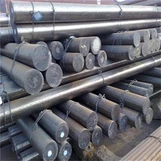
Hey there! I'm a supplier of cold drawn steel bars, and I'm super excited to take you through the process of how these amazing steel bars are made. Cold drawn steel bars are widely used in various industries due to their high precision, smooth surface finish, and excellent mechanical properties. So, let's dive right in!


Starting with the Raw Material
The first step in making cold drawn steel bars is selecting the right raw material. We usually start with hot rolled steel bars. These hot rolled bars are produced by heating large steel billets or blooms to high temperatures and then passing them through a series of rolling mills to reduce their cross - section and give them the initial shape.
The choice of steel grade depends on the intended application of the final cold drawn steel bar. For example, if you need a steel bar with high strength and good toughness for use in automotive components, you might choose 42CrMo4 Alloy Steel. On the other hand, if you're looking for a steel bar with good spring properties, 65Mn Spring Steel Round Bar could be a great option. And for general - purpose applications, JIS S20C Carbon Steel is often used.
Pre - Treatment of the Hot Rolled Bars
Once we have the hot rolled steel bars, we need to prepare them for the cold drawing process. First, we clean the bars to remove any scale, rust, or other impurities on the surface. This is usually done by pickling the bars in an acid solution. Pickling helps to expose a clean and smooth surface, which is essential for the cold drawing process.
After pickling, we coat the bars with a lubricant. The lubricant serves two main purposes. Firstly, it reduces the friction between the steel bar and the drawing die during the cold drawing process. This not only makes the drawing process smoother but also helps to prevent damage to the surface of the bar. Secondly, it protects the bar from corrosion during the cold drawing process.
The Cold Drawing Process
Now comes the core part of making cold drawn steel bars - the cold drawing process. In this process, we pull the pre - treated hot rolled steel bar through a die with a smaller cross - sectional area than the bar itself. This is done using a drawing machine.
The drawing machine consists of a set of dies, a set of grippers to hold the bar, and a power source to pull the bar through the die. As the bar is pulled through the die, its cross - section is reduced, and its length is increased. The reduction in cross - section can be controlled by the size of the die. We can make multiple passes through different dies to achieve the desired final dimensions and properties of the steel bar.
During the cold drawing process, the steel undergoes plastic deformation. This plastic deformation causes the grains in the steel to align in the direction of the drawing, which improves the mechanical properties of the steel bar. For example, the strength and hardness of the steel bar increase, and its ductility may decrease slightly.
Annealing (Optional)
In some cases, after the cold drawing process, we may perform an annealing process. Annealing is a heat treatment process where we heat the cold drawn steel bar to a specific temperature and then cool it slowly. This helps to relieve the internal stresses that are generated during the cold drawing process. It also restores some of the ductility of the steel bar, making it more suitable for further processing, such as machining or bending.
Final Inspection and Finishing
Once the cold drawing process (and annealing if necessary) is completed, we conduct a final inspection of the cold drawn steel bars. We check the dimensions of the bars to ensure they meet the required specifications. We also examine the surface finish of the bars to make sure there are no cracks, scratches, or other defects.
After the inspection, we may perform some finishing operations, such as cutting the bars to the desired length, chamfering the ends of the bars, or applying a protective coating. These finishing operations not only make the bars more suitable for the end - user but also enhance their appearance.
Why Choose Cold Drawn Steel Bars?
Cold drawn steel bars have several advantages over hot rolled steel bars. Firstly, they have a higher dimensional accuracy. The cold drawing process allows us to produce steel bars with very tight tolerances, which is crucial for applications where precise dimensions are required. Secondly, they have a smoother surface finish. This makes them more suitable for applications where a good surface finish is important, such as in the production of shafts or bolts. Thirdly, they have better mechanical properties. The plastic deformation during the cold drawing process improves the strength and hardness of the steel bar.
Let's Connect!
If you're in the market for high - quality cold drawn steel bars, I'd love to hear from you. Whether you need a specific steel grade, a particular size, or a custom - made solution, we've got you covered. We have years of experience in the industry, and we're committed to providing our customers with the best products and services. So, don't hesitate to reach out and start a conversation about your requirements. We can work together to find the perfect cold drawn steel bar solution for your project.
References
- ASM Handbook Volume 1: Properties and Selection: Irons, Steels, and High - Performance Alloys.
- Metals Handbook Desk Edition, Third Edition.