As a supplier of S50C carbon steel, I often get asked whether this material can be used in marine environments. It's a valid question, considering the harsh conditions that marine settings present. In this blog, I'll dive into the properties of S50C carbon steel and evaluate its suitability for marine applications.
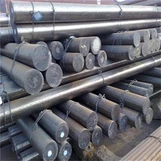
First off, let's talk about what S50C carbon steel is. It's a medium-carbon steel that's known for its good strength, toughness, and wear resistance. It's commonly used in machinery parts, automotive components, and tools. The carbon content in S50C ranges from 0.47% to 0.53%, which gives it a nice balance between hardness and ductility.
Now, let's look at the challenges of marine environments. The most obvious one is corrosion. Saltwater is highly corrosive, and it can quickly eat away at metals if they're not properly protected. Marine environments also have high humidity, which can accelerate the corrosion process. In addition to corrosion, marine applications often require materials to withstand high pressures, impacts, and abrasion.
So, can S50C carbon steel handle these challenges? Well, the short answer is that it can, but it needs some help. S50C carbon steel is not inherently corrosion-resistant. Without proper protection, it will rust and corrode in a marine environment. However, there are several ways to protect S50C carbon steel from corrosion.
One of the most common methods is to apply a protective coating. There are many types of coatings available, such as paint, epoxy, and zinc plating. These coatings act as a barrier between the steel and the saltwater, preventing direct contact and reducing the risk of corrosion. Another option is to use a corrosion inhibitor. Corrosion inhibitors are chemicals that can be added to the environment or applied to the surface of the steel to slow down the corrosion process.


In addition to corrosion protection, S50C carbon steel can also be heat-treated to improve its strength and hardness. Heat treatment involves heating the steel to a specific temperature and then cooling it at a controlled rate. This process can change the microstructure of the steel, making it stronger and more wear-resistant. However, it's important to note that heat treatment can also affect the corrosion resistance of the steel. So, if you're planning to use heat-treated S50C carbon steel in a marine environment, you'll need to make sure that it's properly protected from corrosion.
Another factor to consider is the design of the component. In marine applications, it's important to design components in a way that minimizes the risk of corrosion. For example, you can avoid creating crevices or areas where water can accumulate, as these areas are more prone to corrosion. You can also use materials that are compatible with S50C carbon steel to avoid galvanic corrosion.
Now, let's compare S50C carbon steel with some other materials that are commonly used in marine environments. One popular alternative is stainless steel. Stainless steel is known for its excellent corrosion resistance, making it a great choice for marine applications. However, stainless steel is also more expensive than S50C carbon steel. If cost is a major factor, S50C carbon steel with proper corrosion protection can be a more economical option.
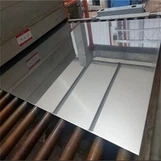
Another option is 65Mn High Carbon Steel Sheet. 65Mn is a high-carbon steel that's similar to S50C in terms of strength and hardness. It's also commonly used in machinery parts and tools. However, like S50C, 65Mn is not inherently corrosion-resistant and will need to be protected in a marine environment.
S45C Carbon Steel is another medium-carbon steel that's often compared to S50C. S45C has a slightly lower carbon content than S50C, which gives it a bit more ductility but slightly less strength. Like S50C, S45C is not corrosion-resistant and will need to be protected in a marine environment.
JIS S20C Carbon Steel is a low-carbon steel that's known for its good weldability and formability. It's commonly used in general engineering applications. However, due to its low carbon content, S20C has lower strength and hardness than S50C. In a marine environment, S20C will also need to be protected from corrosion.
In conclusion, S50C carbon steel can be used in marine environments, but it needs to be properly protected from corrosion. With the right coating, corrosion inhibitor, and design, S50C carbon steel can provide a cost-effective solution for marine applications. If you're considering using S50C carbon steel in your marine project, I'd be happy to discuss your specific requirements and help you find the best solution. Whether you need advice on corrosion protection, heat treatment, or material selection, I'm here to assist you. Feel free to reach out to me to start a conversation about your procurement needs.
References
- ASM Handbook, Volume 13A: Corrosion: Fundamentals, Testing, and Protection
- Metals Handbook Desk Edition, Third Edition