Weldability is a crucial factor when considering the use of different metal alloys, especially in industries where joining components is a common practice. As a supplier of 316 Stainless Steel Plates, I have witnessed firsthand the importance of understanding the weldability of this material compared to other alloys. In this blog, I will delve into the weldability of 316 stainless steel plates and contrast it with several other well - known alloys.
Understanding Weldability
Before we compare 316 stainless steel with other alloys, it's essential to understand what weldability means. Weldability refers to the ability of a material to be welded into a sound joint with specific properties and quality. A material with good weldability can be joined easily using common welding processes without significant defects such as cracks, porosity, or reduced mechanical properties in the welded area.
Weldability of 316 Stainless Steel Plates
316 stainless steel is an austenitic stainless steel alloy that contains chromium, nickel, and molybdenum. The addition of molybdenum enhances its corrosion resistance, especially in chloride - containing environments. When it comes to weldability, 316 stainless steel generally has good characteristics.
One of the advantages of welding 316 stainless steel is its low carbon content. This helps to minimize the formation of chromium carbides during the welding process. Chromium carbides can lead to a phenomenon called sensitization, which reduces the corrosion resistance of the welded area. The low carbon content in 316 stainless steel reduces the risk of sensitization, making it more suitable for welding applications.
316 stainless steel can be welded using a variety of welding processes, including shielded metal arc welding (SMAW), gas tungsten arc welding (GTAW), and gas metal arc welding (GMAW). Each process has its own advantages and is suitable for different applications. For example, GTAW is often used for high - quality, precision welding jobs, while SMAW is more commonly used for field welding due to its portability.
However, welding 316 stainless steel also has some challenges. During the welding process, the heat input can cause the formation of delta ferrite in the weld metal. While a small amount of delta ferrite can be beneficial in preventing hot cracking, excessive amounts can reduce the corrosion resistance and toughness of the weld. Therefore, proper control of the welding parameters, such as heat input, welding speed, and shielding gas, is crucial to ensure a high - quality weld.
Comparison with Other Alloys
309S Stainless Steel
SS Plate 309S Stainless Steel is another austenitic stainless steel alloy. It has a higher chromium and nickel content compared to 316 stainless steel, which gives it better high - temperature resistance. In terms of weldability, 309S stainless steel also has good weldability.
The higher alloy content in 309S stainless steel means that it has a higher tendency to form delta ferrite during welding. However, this is not necessarily a disadvantage, as the increased delta ferrite can improve the resistance to hot cracking. When welding 309S stainless steel, similar welding processes as for 316 stainless steel can be used. But due to its higher alloy content, it may require more precise control of the welding parameters to avoid excessive ferrite formation and to maintain the desired mechanical and corrosion - resistant properties.
201 Stainless Steel
A240 201 Stainless Steel Plates are a more economical alternative to 316 stainless steel. 201 stainless steel contains manganese instead of a significant amount of nickel. In terms of weldability, 201 stainless steel is more challenging to weld compared to 316 stainless steel.
The presence of manganese in 201 stainless steel can lead to the formation of harmful phases during welding, such as sigma phase. Sigma phase can cause embrittlement of the weld and reduce its corrosion resistance. Additionally, 201 stainless steel has a relatively higher carbon content, which increases the risk of sensitization during welding. Special care must be taken when welding 201 stainless steel, including using appropriate filler metals and controlling the welding heat input to minimize the formation of these harmful phases.
Welding Considerations for Different Applications
The choice of alloy and the welding process depends on the specific application. For applications where corrosion resistance is the primary concern, such as in the food and beverage industry or marine environments, 316 stainless steel is often the preferred choice due to its excellent corrosion - resistant properties and good weldability.

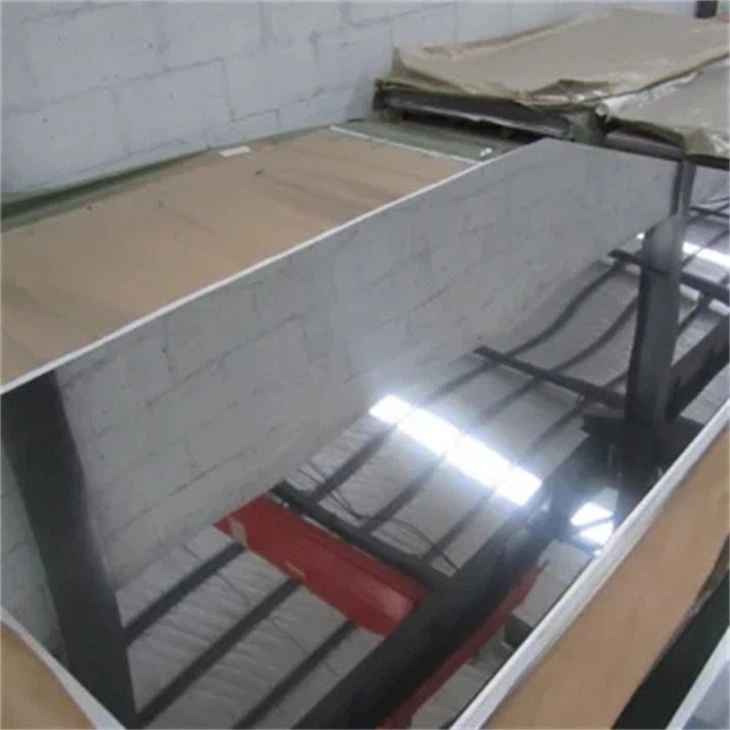
In high - temperature applications, 309S stainless steel may be more suitable because of its better high - temperature resistance. However, the welding process needs to be carefully controlled to ensure the integrity of the weld.
For cost - sensitive applications where corrosion resistance requirements are not as stringent, 201 stainless steel can be considered. But the challenges in welding 201 stainless steel must be addressed to ensure a reliable weld.
Tips for Welding 316 Stainless Steel Plates
If you are planning to weld 316 stainless steel plates, here are some tips to ensure a successful weld:
- Clean the Surface: Thoroughly clean the surface of the stainless steel plates before welding to remove any contaminants, such as oil, grease, or dirt. Contaminants can cause porosity and other defects in the weld.
- Choose the Right Filler Metal: Select a filler metal that is compatible with 316 stainless steel. The filler metal should have similar chemical composition to ensure good mechanical and corrosion - resistant properties in the weld.
- Control the Heat Input: As mentioned earlier, excessive heat input can cause problems such as delta ferrite formation and sensitization. Use the appropriate welding parameters, such as welding current, voltage, and speed, to control the heat input.
- Use Proper Shielding Gas: When using processes like GTAW and GMAW, use the correct shielding gas to protect the weld from oxidation and other atmospheric contaminants.
Conclusion
In conclusion, 316 stainless steel plates offer a good balance of weldability and corrosion resistance. Compared to other alloys such as 309S stainless steel and 201 stainless steel, it has its own unique advantages and challenges. Understanding the weldability of different alloys is essential for making the right choice in various applications.
If you are in the market for high - quality Steel 316 Stainless Steel Plate or need more information about the weldability of these materials, feel free to contact us for procurement and further discussions. We are committed to providing you with the best products and technical support.
References
- ASM Handbook, Volume 6: Welding, Brazing, and Soldering, ASM International
- Stainless Steel Welding Handbook, The James F. Lincoln Arc Welding Foundation
- Welding Metallurgy of Stainless Steels, AWS Publications