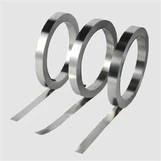
Hey there! I'm a supplier of 75Cr Alloy Steel Strip, and today I wanna chat about the effects of different alloying elements on this awesome steel strip.
Let's start with chromium (Cr). As you can probably tell from the name, 75Cr has a significant amount of chromium. Chromium is a real game - changer when it comes to steel. It forms a thin, protective oxide layer on the surface of the steel strip. This layer acts as a shield, preventing oxygen and moisture from reaching the underlying metal. So, one of the major effects of chromium in 75Cr alloy steel strip is improved corrosion resistance. Whether it's used in a humid environment or exposed to some mild chemicals, the steel strip can hold up pretty well.
Moreover, chromium also plays a crucial role in enhancing the hardness and wear resistance of the steel. When the steel is heat - treated, chromium atoms interact with the iron and carbon in the alloy. This interaction helps in the formation of hard carbide particles. These carbides are like little hard nuggets in the steel matrix, making it more resistant to abrasion. So, if you're using 75Cr alloy steel strip in applications where there's a lot of friction, like in machinery parts that rub against each other, the chromium in it will ensure that the strip lasts longer.
Next up is carbon (C). Carbon is the backbone of steel. In 75Cr alloy steel strip, carbon content is carefully adjusted to achieve the desired properties. A higher carbon content generally means higher hardness. When the steel is quenched and tempered, the carbon atoms get trapped in the iron lattice, creating a structure that is very hard. However, there's a trade - off. Too much carbon can make the steel brittle. So, in 75Cr, the carbon content is balanced to give a good combination of hardness and toughness.
For example, in cutting tools made from 75Cr alloy steel strip, the right amount of carbon allows the tool to maintain a sharp edge. It can cut through materials effectively without chipping easily. But if the carbon content was too high, the tool might break under stress instead of cutting.
Manganese (Mn) is another important alloying element. Manganese helps in deoxidizing the steel during the manufacturing process. It combines with oxygen and sulfur impurities in the steel, forming compounds that can be easily removed. This purification process results in a cleaner and more homogeneous steel structure.
Manganese also has an effect on the hardenability of the steel. It lowers the critical cooling rate required for the steel to harden during quenching. This means that 75Cr alloy steel strip can be hardened more easily, even in larger cross - sections. So, if you're making a thick piece of equipment using this steel strip, manganese ensures that the entire piece gets hardened uniformly.
Silicon (Si) is often added in small amounts to 75Cr alloy steel strip. Silicon is a strong deoxidizer, just like manganese. It helps in removing oxygen from the molten steel, reducing the number of pores and defects in the final product.
Silicon also has an impact on the strength and elasticity of the steel. It strengthens the steel matrix, making the 75Cr alloy steel strip more resistant to deformation under load. In applications where the steel strip needs to withstand high - stress conditions, like in springs or suspension components, silicon helps the strip maintain its shape and performance.
Now, let's talk about some real - world applications. Our 75Cr alloy steel strip is widely used in the manufacturing of saw blades. The combination of the alloying elements gives the saw blades excellent cutting performance. The high hardness from carbon and chromium allows the blade to cut through various materials, from wood to metal. And the corrosion resistance from chromium ensures that the blade doesn't rust easily, even when exposed to moisture.
If you're in the market for bimetal saw blade steel strips, you can check out our Bimetal Saw Blade Steel Strips. These strips are made with precision, using the best alloying techniques to ensure top - notch performance.
We also offer Medium and High Carbon Steel X32. This steel has its own unique set of properties, and it's a great option for applications where different levels of hardness and toughness are required.
Another product in our lineup is the D6A Saws Blade Steel Strip. This strip is designed for heavy - duty sawing applications. The alloying elements in it are carefully selected to provide maximum durability and cutting efficiency.
If you're interested in our 75Cr alloy steel strip or any of our other products, we'd love to have a chat with you. Whether you're a small - scale manufacturer or a large industrial company, we can work together to meet your specific requirements. Just reach out to us, and we'll be happy to discuss your needs and provide you with the best solutions.
In conclusion, the alloying elements in 75Cr alloy steel strip have a profound impact on its properties. Chromium gives corrosion resistance and hardness, carbon provides the right balance of hardness and toughness, manganese improves hardenability, and silicon enhances strength and elasticity. These properties make our 75Cr alloy steel strip suitable for a wide range of applications, especially in the saw blade industry. So, if you're looking for high - quality steel strips, don't hesitate to get in touch.


References:
- "Steels: Processing, Structure, and Performance" by George Krauss
- "The Science and Engineering of Materials" by Donald R. Askeland and Pradeep P. Phule