Hey there! As a supplier of 75Cr Alloy Steel Strip, I often get asked about what residual stress in 75Cr alloy steel strip is. So, I thought I'd write this blog to share some insights on this topic.
First off, let's understand what residual stress is in general. Residual stress refers to the stress that remains in a material after the original cause of the stress, like external forces or heat treatment, has been removed. It can be present in any material, but when it comes to 75Cr alloy steel strip, it has some unique characteristics and implications.
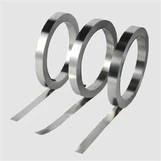
75Cr alloy steel strip is a popular choice in many industries due to its excellent mechanical properties, such as high strength, good wear resistance, and decent toughness. However, during the manufacturing process of this steel strip, residual stress can easily build up. There are several ways this can happen.
One of the main culprits is the heat treatment process. When 75Cr alloy steel strip goes through processes like quenching and tempering, rapid heating and cooling can cause different parts of the strip to expand and contract at different rates. This uneven thermal expansion and contraction lead to the formation of residual stress. For example, during quenching, the outer layer of the steel strip cools down much faster than the inner part. As a result, the outer layer hardens and contracts, while the inner part is still relatively hot and soft. This creates a situation where the outer layer is in a state of compressive stress, and the inner part is in tensile stress.
Another factor is the cold rolling process. Cold rolling is used to achieve the desired thickness and surface finish of the steel strip. But during this process, the material is deformed plastically. The deformation is not uniform throughout the strip, which also generates residual stress. The rolling forces can cause the surface layer to be in a different stress state compared to the core of the strip.

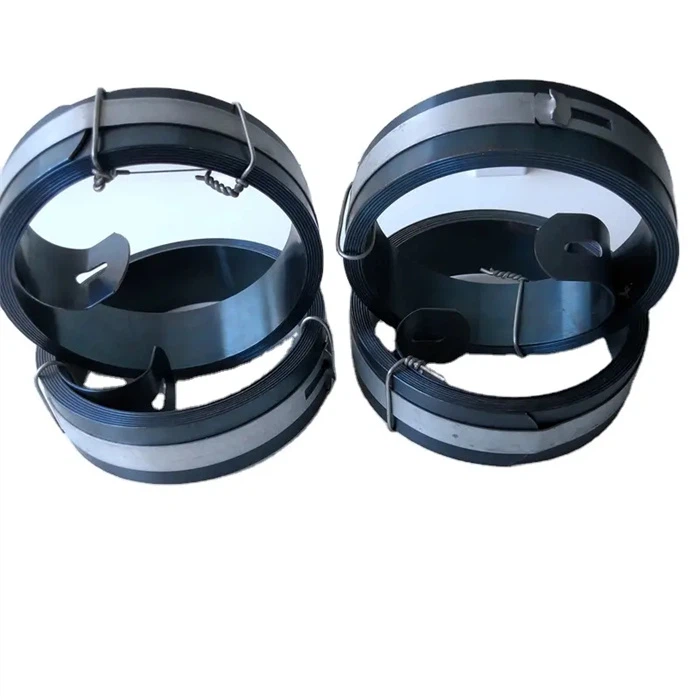
Now, you might be wondering why residual stress matters. Well, it can have a significant impact on the performance and service life of the 75Cr alloy steel strip. High levels of residual stress can lead to dimensional instability. This means that the steel strip may warp or distort over time, which is a big no - no in applications where precise dimensions are crucial.
In addition, residual stress can reduce the fatigue resistance of the steel strip. Fatigue failure occurs when a material is subjected to repeated loading. The existing residual stress can interact with the applied cyclic stress, making the material more prone to cracking and failure. For example, in a band - saw blade made from 75Cr alloy steel strip, if there is high residual stress, it may break prematurely during normal use, which can be a huge headache for users.
On the flip side, in some cases, residual stress can be beneficial. Compressive residual stress on the surface of the steel strip can actually improve its resistance to corrosion and wear. It can act as a barrier, preventing cracks from initiating and propagating on the surface.
So, how do we deal with residual stress in 75Cr alloy steel strip? One common method is stress relief annealing. This involves heating the steel strip to a specific temperature below its critical point and holding it there for a certain period of time, followed by slow cooling. This process helps to redistribute the residual stress and reduce its magnitude.
Another approach is shot peening. Shot peening involves bombarding the surface of the steel strip with small spherical particles. This creates compressive residual stress on the surface, which can improve the fatigue resistance and wear properties of the strip.
As a supplier, we pay close attention to the residual stress in our 75Cr alloy steel strip. We have strict quality control measures in place to ensure that the residual stress is within an acceptable range. We use advanced testing methods, such as X - ray diffraction and ultrasonic testing, to accurately measure the residual stress in the strip.
If you're in the market for high - quality 75Cr alloy steel strip, we've got you covered. We also offer other great products like D6A High Carbon Steel Strip, Medium and High Carbon Steel X32, and D6A Saws Blade Steel Strip. These products are also manufactured with the highest standards to meet your specific needs.
If you're interested in purchasing our products or have any questions about residual stress or our steel strips in general, don't hesitate to get in touch with us. We're always here to have a chat and discuss your requirements. We can offer you professional advice and the best solutions for your projects.
In conclusion, understanding residual stress in 75Cr alloy steel strip is crucial for both suppliers and users. By knowing how it forms, its effects, and how to control it, we can ensure that the steel strip performs at its best in various applications. So, if you're looking for a reliable supplier of 75Cr alloy steel strip and related products, give us a chance to serve you.
References
- "Metallurgy of Steel" by George E. Totten and W. Todd Wood
- "Mechanical Behavior of Materials" by Norman E. Dowling