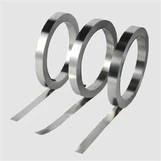
Hey there, fellow steel enthusiasts! I'm a supplier of cold rolled steel strips, and I'm super pumped to share some insights on how to test the hardness of these bad boys. Cold rolled steel strips are used in a ton of industries, from automotive to construction, and getting the hardness right is crucial for their performance.
First off, let's talk about why we even need to test the hardness of cold rolled steel strips. Hardness is a measure of how resistant the steel is to local deformation, like indentation or scratching. It effects the steel's strength, wear resistance, and ductility. Different applications require different hardness levels. For example, in the saw blade industry, you have stuff like SAE8660 Nickel Chrome Molybdenum Alloy Steel, Chain Saw Steel, and 65Mn Carbon Steel Band Saw Blade. These blades need to be hard enough to cut through materials efficiently but also tough enough not to break easily.
Now, let's dive into the methods of testing the hardness of cold rolled steel strips. There are several common methods, and each has its pros and cons.
1. Rockwell Hardness Test
The Rockwell hardness test is one of the most widely used methods. It's pretty quick and easy to perform. Here's how it works:


- First, you need a Rockwell hardness tester. This machine has a diamond cone or a spherical indenter.
- You place the cold rolled steel strip on a flat surface under the indenter.
- The machine applies a preliminary load first, which is usually around 10 kgf. This is to seat the indenter properly on the surface of the steel.
- Then, an additional major load is applied. The major load can vary depending on the scale you're using. For cold rolled steel strips, you might use scales like HRC (Rockwell C scale), which uses a diamond cone indenter with a major load of 150 kgf.
- After the major load is applied and held for a short period (usually 15 seconds), it's removed. The hardness value is then read from the scale on the machine.
The good thing about the Rockwell test is that it's fast and non - destructive to a large extent. You can test the hardness at different points on the steel strip to get an average value. However, it has some limitations. The test results can be affected by the surface finish of the steel strip, and it's not very accurate for thin or small samples.
2. Brinell Hardness Test
The Brinell hardness test is another popular method. Here's how this test goes:
- You need a Brinell hardness tester, which uses a hardened steel or tungsten carbide ball as an indenter.
- You place the steel strip on a stable surface and apply a specific load to the ball indenter. For cold rolled steel, the load is typically 3000 kgf.
- The indenter is pressed into the steel for a specified time (usually 10 - 15 seconds).
- After the load is removed, you measure the diameter of the indentation left on the surface of the steel using a microscope.
- The Brinell hardness number (BHN) is calculated based on the load applied and the area of the indentation.
The Brinell test gives a more average hardness value across a larger area compared to the Rockwell test. It's also less sensitive to surface irregularities. But it has its downsides. It's a more destructive test because it leaves a relatively large indentation on the steel strip. And it takes more time to perform compared to the Rockwell test.
3. Vickers Hardness Test
The Vickers hardness test is a bit more precise than the previous two. The steps are as follows:
- A Vickers hardness tester uses a square - based diamond pyramid indenter.
- The steel strip is placed under the indenter, and a load is applied. The load can be much smaller than in the Brinell or Rockwell tests, and it can range from 1 - 1000 gf depending on the sample.
- The indenter is pressed into the steel for a set time (usually 10 - 15 seconds).
- After the load is removed, you use a microscope to measure the two diagonals of the square indentation left on the steel.
- The Vickers hardness number (HV) is calculated based on the load and the surface area of the indentation.
The Vickers test is very accurate and can be used for thin or small samples. It's also good for testing the hardness of different microstructures within the steel, like in the case of heat - treated cold rolled steel strips. However, it's a slow process, and the equipment can be a bit more expensive.
4. Shore Hardness Test
The Shore hardness test is mainly used for materials that are more elastic, like rubber. But it can also be used for cold rolled steel strips, especially when you want to quickly check the relative hardness.
- You use a Shore hardness tester, which has a spring - loaded indenter.
- You press the indenter against the surface of the steel strip. The indenter rebounds, and the hardness value is read from the scale on the tester.
The Shore test is very portable and easy to use. It can give you a quick indication of the hardness, but the results are not as precise as the other methods. It's more of a comparative test rather than an absolute measurement.
Now, when you're testing the hardness of cold rolled steel strips, there are some important things to keep in mind.
Preparation of the Sample
- Surface finish: Before you perform any hardness test, you need to make sure the surface of the steel strip is smooth and clean. You can grind or polish the surface if it's rough. A bad surface finish can lead to inaccurate test results.
- Sample thickness: For some tests, like the Rockwell and Brinell, the thickness of the steel strip matters. If the strip is too thin, the indentation might go all the way through or be affected by the backing material. So, make sure you choose the appropriate test method based on the thickness of your sample.
Testing Environment
- Temperature: Temperature can affect the hardness of the steel. Try to perform the tests at a stable temperature, preferably around room temperature (20 - 25°C). If the temperature is too high or too low, it can cause the steel to expand or contract, which will affect the test results.
Multiple Tests
Don't rely on just one test result. Test the hardness at different locations on the steel strip. This helps to account for any variations in hardness across the strip, which can be caused by factors like uneven rolling or heat treatment.
If you're in the market for high - quality cold rolled steel strips, we're here to help. As a supplier, we can offer you steel strips with the right hardness levels for your specific applications. Whether you need them for making saw blades or for other industrial purposes, we can provide you with samples for you to test the hardness yourself. If you're interested in discussing your requirements or getting a quote, feel free to reach out and start a procurement negotiation.
References
- ASTM International Standards on Hardness Testing (E18 - 19 Standard Test Methods for Rockwell Hardness of Metallic Materials)
- ISO Standards for Metallic Materials - Hardness Testing (ISO 6508 for Rockwell hardness, ISO 6506 for Brinell hardness, and ISO 6507 for Vickers hardness)