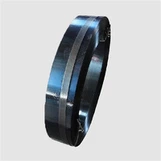
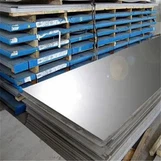
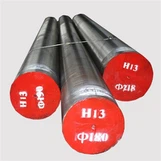
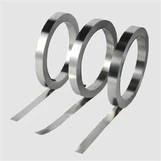
Hey there! As a supplier of 50CrV4 Spring Steel, I've seen firsthand how important it is to have resilient steel for various applications. In this blog post, I'm gonna share some tips on how to improve the resilience of 50CrV4 Spring Steel.
First off, let's understand what resilience means in the context of steel. Resilience is the ability of a material to absorb energy when it's deformed elastically and then release that energy upon unloading. For 50CrV4 Spring Steel, which is commonly used in springs and other components that need to withstand repeated stress, high resilience is crucial.
1. Heat Treatment
One of the most effective ways to improve the resilience of 50CrV4 Spring Steel is through proper heat treatment. Heat treatment can significantly alter the microstructure of the steel, which in turn affects its mechanical properties.
Quenching and Tempering
Quenching is the process of rapidly cooling the steel from a high temperature. This forms a hard and brittle martensitic structure. However, martensite alone isn't very resilient. That's where tempering comes in. Tempering involves reheating the quenched steel to a lower temperature and holding it there for a specific time. This process relieves the internal stresses created during quenching and transforms some of the martensite into a more ductile and resilient structure.
The key is to find the right balance between hardness and toughness. If the tempering temperature is too low, the steel will remain too hard and brittle, with low resilience. On the other hand, if the tempering temperature is too high, the steel will become too soft, and its strength will decrease. For 50CrV4 Spring Steel, a typical quenching temperature might be around 850 - 870°C, followed by tempering at 450 - 550°C, depending on the specific application requirements.
2. Alloying Elements
50CrV4 Spring Steel already contains alloying elements like chromium (Cr) and vanadium (V), which play important roles in enhancing its properties.
Chromium
Chromium improves the hardenability of the steel. It forms carbides that help to strengthen the steel and increase its resistance to wear and corrosion. A higher chromium content can also contribute to better resilience by improving the steel's ability to absorb and dissipate energy.
Vanadium
Vanadium is another important alloying element. It forms fine carbides that refine the grain structure of the steel. A finer grain structure generally leads to better mechanical properties, including higher resilience. Vanadium also helps to improve the steel's strength and toughness at high temperatures.
In some cases, additional alloying elements can be added in small amounts to further enhance the resilience of 50CrV4 Spring Steel. For example, nickel (Ni) can improve the steel's toughness and ductility, while molybdenum (Mo) can enhance its hardenability and strength.
3. Surface Treatment
The surface of the 50CrV4 Spring Steel can have a significant impact on its resilience. Surface defects, such as cracks or scratches, can act as stress concentrators and reduce the steel's ability to withstand stress.
Shot Peening
Shot peening is a common surface treatment method. It involves bombarding the surface of the steel with small spherical shots. This creates a compressive stress layer on the surface, which helps to prevent crack initiation and propagation. The compressive stress also improves the steel's fatigue resistance, which is closely related to its resilience.
Nitriding
Nitriding is another effective surface treatment. It involves diffusing nitrogen into the surface of the steel to form a hard and wear - resistant nitride layer. This layer can improve the steel's surface hardness, corrosion resistance, and fatigue strength, all of which contribute to better resilience.


4. Manufacturing Process
The way the 50CrV4 Spring Steel is manufactured can also affect its resilience.
Rolling and Forging
Proper rolling and forging processes can help to refine the grain structure of the steel. During rolling and forging, the steel is deformed under high pressure, which breaks up the large grains and forms a more uniform and fine - grained structure. A finer grain structure generally results in better mechanical properties, including higher resilience.
Machining
When machining 50CrV4 Spring Steel, it's important to use the right cutting tools and machining parameters. Improper machining can cause surface damage, such as rough surfaces or micro - cracks, which can reduce the steel's resilience. Using sharp cutting tools and appropriate cutting speeds and feeds can help to minimize surface damage and ensure a high - quality finish.
Comparison with Other Steels
It's worth comparing 50CrV4 Spring Steel with other steels like S50C Carbon Steel and S45C Carbon Steel. While S50C and S45C are carbon steels, 50CrV4 is an alloy steel. The alloying elements in 50CrV4 give it better hardenability, strength, and resilience compared to S50C and S45C. Carbon steels are generally more affordable but may not be as suitable for applications that require high resilience and fatigue resistance. 50CrV4 Spring Steel is often the preferred choice for springs and other components that need to withstand repeated stress.
Conclusion
Improving the resilience of 50CrV4 Spring Steel is a multi - faceted process that involves heat treatment, alloying, surface treatment, and proper manufacturing processes. By paying attention to these aspects, we can ensure that the 50CrV4 Spring Steel we supply meets the high - performance requirements of our customers.
If you're in the market for high - quality 50CrV4 Spring Steel or have any questions about improving its resilience, don't hesitate to reach out. We're here to help you find the best solutions for your specific applications. Whether you're in the automotive, aerospace, or any other industry that requires reliable spring steel, we can provide the right product and support.
References
- ASM Handbook Volume 4: Heat Treating. ASM International.
- Steel Metallurgy and Applications. George E. Totten, Makarand S. Shetty.
- Materials Science and Engineering: An Introduction. William D. Callister Jr., David G. Rethwisch.