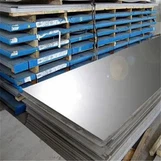
Hey there! As a supplier of 310 stainless steel sheets, I've got a lot to share about how this amazing material performs in high - temperature environments. Let's dive right in.
First off, let's talk about what makes 310 stainless steel special. 310 stainless steel is an austenitic stainless steel alloy. It contains a relatively high amount of chromium (around 24 - 26%) and nickel (19 - 22%). These high percentages of chromium and nickel are the key to its excellent high - temperature performance.
In high - temperature environments, oxidation is one of the biggest challenges for metals. When a metal is exposed to high temperatures in the presence of oxygen, it forms an oxide layer on its surface. If this oxide layer is not stable, it can flake off, exposing fresh metal to further oxidation, which can lead to rapid degradation of the material.
310 stainless steel, however, forms a stable chromium oxide layer on its surface when heated. This oxide layer acts as a protective barrier, preventing further oxidation of the underlying metal. This means that even at extremely high temperatures, 310 stainless steel sheets can resist oxidation for long periods. For example, in industrial furnaces where temperatures can reach up to 1100°C (2012°F), 310 stainless steel maintains its integrity and doesn't suffer from severe oxidation.
Another important aspect of performance in high - temperature environments is strength. As the temperature rises, most metals start to lose their strength. But 310 stainless steel holds up pretty well. Its austenitic structure gives it good creep resistance. Creep is the slow deformation of a material under a constant load at high temperatures. In applications where the 310 stainless steel sheet is under stress at high temperatures, like in heat exchangers or exhaust systems, its creep resistance ensures that it doesn't deform easily over time.
Now, let's compare 310 stainless steel with some other common stainless steel grades. If you're familiar with 316l Data Sheet, you know that 316L is a popular choice for many applications. However, 316L is not designed for high - temperature use like 310 stainless steel. 316L starts to lose its corrosion resistance and strength at relatively lower high temperatures compared to 310. Similarly, Stainles Steel Plate S20100 is more suitable for general - purpose applications and doesn't have the high - temperature performance of 310 stainless steel. And 304L Stainless Steel Sheet, while widely used, also falls short in high - temperature environments. 304L can suffer from intergranular corrosion at high temperatures, which is not a problem with 310 stainless steel.


In addition to oxidation and strength, 310 stainless steel also has good thermal stability. It doesn't undergo phase changes easily at high temperatures. Phase changes can cause a material to expand or contract unevenly, which can lead to cracking or other forms of damage. With 310 stainless steel, you can be confident that it will maintain its shape and structure even when the temperature fluctuates.
There are many industries that benefit from the high - temperature performance of 310 stainless steel sheets. In the petrochemical industry, for example, 310 stainless steel is used in furnaces and reactors where high - temperature and corrosive environments are common. In the power generation industry, it's used in boiler tubes and superheaters. And in the food processing industry, 310 stainless steel is used in ovens and other high - temperature equipment because of its resistance to oxidation and its ability to maintain a clean surface.
When it comes to fabricating 310 stainless steel sheets, it's relatively easy to work with. It can be cut, welded, and formed using standard metalworking techniques. However, because of its high nickel and chromium content, some special considerations may be needed during welding to ensure the best results. But overall, it's a versatile material that can be made into various shapes and sizes to meet different application requirements.
One thing to keep in mind is that while 310 stainless steel is great for high - temperature applications, it's not the cheapest option. But when you consider the long - term benefits, such as reduced maintenance costs and longer service life, it's definitely worth the investment.
If you're in the market for a stainless steel sheet that can perform well in high - temperature environments, 310 stainless steel is a top choice. Whether you're building a new industrial furnace, upgrading an existing heat exchanger, or looking for a reliable material for your high - temperature equipment, our 310 stainless steel sheets are up to the task.
We're here to help you find the right 310 stainless steel sheet for your specific needs. If you have any questions about the product, its performance, or how to use it in your application, feel free to reach out. We can also provide you with samples so you can test it out for yourself. Don't hesitate to contact us to start a conversation about your procurement needs.
References
- ASM Handbook, Volume 13A: Corrosion: Fundamentals, Testing, and Protection
- Metals Handbook Desk Edition, 3rd Edition