Stainless steel pipes are a common sight in various industrial applications, and one question that often arises is whether they can be used in chemical plants. As a trusted supplier of high - quality stainless steel pipes, I am well - versed in the properties of these pipes and their suitability for chemical plant environments. In this blog, we'll explore the characteristics of stainless steel pipes, their performance in chemical settings, and how they can be a valuable asset for chemical plants.
Characteristics of Stainless Steel Pipes
Stainless steel is an alloy primarily composed of iron, with a minimum of 10.5% chromium. The addition of chromium forms a thin, invisible, and self - healing oxide layer on the surface of the steel, which is called the passive layer. This passive layer is what gives stainless steel its remarkable corrosion resistance.
Another advantage of stainless steel pipes is their high strength. They can withstand high pressures and temperatures, making them suitable for a wide range of industrial applications. Whether it's transporting fluids at high speeds or operating in high - temperature environments, stainless steel pipes can handle the stress.
Stainless steel pipes also offer excellent durability. They are resistant to abrasion, impact, and general wear and tear. This means that they have a long service life, reducing the need for frequent replacements and minimizing downtime in chemical plants.
Suitability for Chemical Plants
Corrosion Resistance in Chemical Environments
Chemical plants deal with a wide variety of corrosive substances, including acids, alkalis, and salts. Stainless steel pipes, due to their passive layer, can resist corrosion from many of these chemicals. For example, grades like SS 304 and SS 316 are commonly used in chemical plants. SS 304 is suitable for handling mild corrosive substances such as food acids and some organic chemicals. It has good general corrosion resistance and is relatively cost - effective.
On the other hand, 2 Inch 316 Stainless Pipe contains molybdenum, which enhances its resistance to pitting and crevice corrosion in chloride - containing environments. This makes it ideal for chemical processes where saltwater or chloride - based chemicals are involved. For instance, in desalination plants within chemical complexes or in processes that use brine solutions, SS 316 pipes can perform exceptionally well.
High - Temperature and High - Pressure Applications
Chemical reactions in plants often occur at high temperatures and pressures. Stainless steel pipes can withstand these extreme conditions. Their high melting point and good mechanical properties at elevated temperatures ensure that they maintain their integrity during the chemical processes. For example, in steam - based chemical reactions or in high - pressure reactors, stainless steel pipes can safely transport the reactants and products without deforming or failing.
Hygiene and Cleanliness
In some chemical processes, especially those in the pharmaceutical or food - grade chemical production, hygiene is of utmost importance. Stainless steel pipes are easy to clean and sterilize. They do not support the growth of bacteria or other microorganisms, which is crucial for maintaining the purity of the chemicals being processed. This makes them a preferred choice for applications where contamination is a concern.
Types of Stainless Steel Pipes for Chemical Plants
Welded Pipes
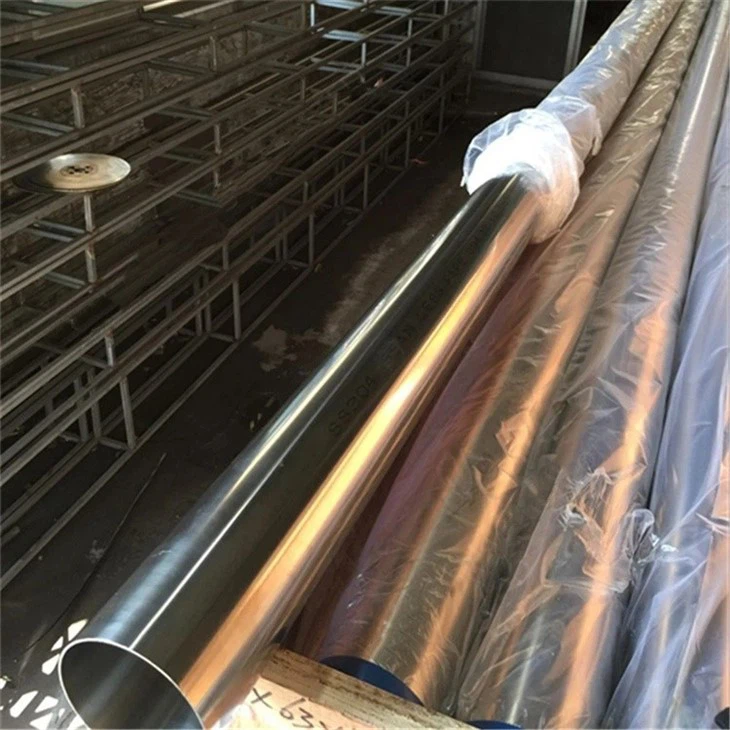
Welded stainless steel pipes are a popular choice for chemical plants. Welded Railing Pipe SS 304 Steel Tube is commonly used for various applications in chemical plants. Welded pipes are cost - effective and can be produced in large diameters. They are suitable for transporting non - critical fluids or for use in structural applications within the plant. The welding process used to manufacture these pipes is carefully controlled to ensure the integrity of the pipe and its corrosion resistance.
Seamless Pipes
Seamless stainless steel pipes are often used for more critical applications in chemical plants. They have a uniform wall thickness and no welded joints, which makes them more resistant to stress and corrosion. In high - pressure and high - temperature applications, seamless pipes are preferred as they offer better reliability. However, they are generally more expensive than welded pipes.

Rectangular Pipes
Rectangular Welded Tube SS in Architectural Ornament can also find applications in chemical plants. While they are commonly associated with architectural uses, their unique shape can be advantageous in some chemical plant layouts. They can be used for structural support, or in some cases, for transporting fluids in specific piping systems where the rectangular shape is more suitable for space utilization or flow requirements.
Challenges and Considerations
Material Selection
Selecting the right grade of stainless steel for a chemical plant is crucial. Different chemicals have different corrosive properties, and the wrong choice of stainless steel can lead to premature pipe failure. It is essential to conduct a thorough chemical analysis of the substances that the pipes will come into contact with and consult with experts to determine the most appropriate grade.
Welding and Fabrication
Proper welding and fabrication techniques are essential to maintain the corrosion resistance of stainless steel pipes. Improper welding can damage the passive layer and create areas of weakness that are prone to corrosion. Therefore, it is important to use qualified welders and follow strict welding procedures.
Maintenance
Although stainless steel pipes are durable, they still require regular maintenance. This includes inspecting for signs of corrosion, checking for leaks, and ensuring that the pipes are properly supported. Regular maintenance can extend the service life of the pipes and prevent costly breakdowns.
Conclusion
In conclusion, stainless steel pipes can indeed be used in chemical plants, and they offer numerous advantages. Their corrosion resistance, high - temperature and high - pressure capabilities, durability, and hygiene make them a suitable choice for a wide range of chemical applications. However, proper material selection, welding, fabrication, and maintenance are essential to ensure their optimal performance.
If you are in the chemical plant industry and are looking for high - quality stainless steel pipes, we are here to help. Our extensive range of stainless steel pipes, including Welded Railing Pipe SS 304 Steel Tube, Rectangular Welded Tube SS in Architectural Ornament, and 2 Inch 316 Stainless Pipe, can meet your specific requirements. Contact us today to discuss your needs and start a procurement negotiation. We are committed to providing you with the best products and services to ensure the success of your chemical plant operations.
References
- ASM Handbook Committee. (2004). ASM Handbook Volume 13A: Corrosion: Fundamentals, Testing, and Protection. ASM International.
- Schweitzer, P. A. (2016). Corrosion Resistance Tables, Fourth Edition. McGraw - Hill Education.
- Pipe Fabrication Institute. (2019). Welding and Fabrication of Stainless Steel Pipes. PFI.